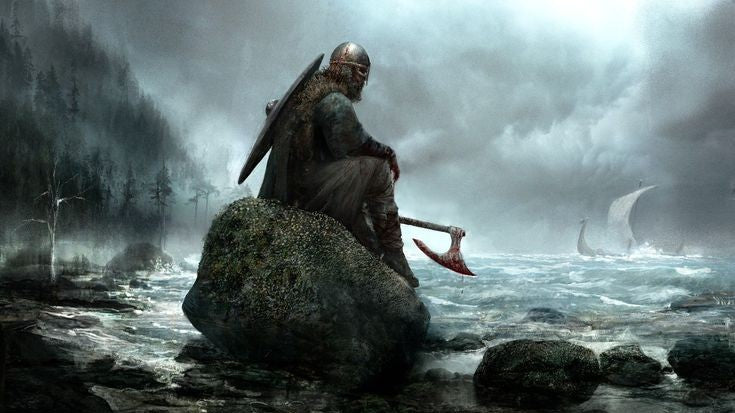
The Warrior’s Rest: The Norse Concept of Unwinding After the Battle of Daily Life
Modern existence is often described as a constant grind, filled with endless schedules, career pressures, and digital noise. This relentless pacing frequently leaves people searching for meaningful ways to unplug and restore their mental health. While the Viking Age seems worlds apart from the complexities of the twenty-first century, the Norse people faced an incredibly high-stress, high-stakes environment of their own. Survival in the ancient North required immense physical and mental exertion, whether on a summer voyage or maintaining a homestead. Because their daily life was a metaphorical and literal battlefield, the Norse developed a profound, sacred approach to recovery, socialization, and complete mental detachment.
The Sanctuary of the Fire and the Longhouse
To understand how the Norse recovered from stress, one must look at the architectural and social center of their world: the longhouse. The exterior landscape of Scandinavia was harsh, unpredictable, and physically demanding. The interior of the longhouse, however, was designed as a collective sanctuary. At the heart of every home was the hearth, a long central fire pit that provided consistent warmth, light, and a focal point for the community.
When the labor of the day was done, the longhouse transformed into a space of total decompression. The Norse did not compartmentalize their relaxation; they understood that true recovery happens in a communal setting. Sitting on elevated benches around the fire, wrapped in wool blankets and furs, individuals found solace in shared human warmth. The crackle of the fire and the low lighting naturally triggered a state of calm, helping to lower the internal defenses built up during hours of vigilant outdoor survival.
Sauna Culture and Physical Purification
Recovery for a Norse warrior or laborer was deeply tied to physical purification. Across the Baltic and Nordic regions, sweat baths and primitive saunas were essential fixtures of village life. These structures, often consisting of small, enclosed wooden huts or sod houses, utilized heated stones over which water was poured to create intense, enveloping steam.
The sweat bath was a ritual of rejuvenation. After days of heavy lifting, rowing, or marching under the weight of iron gear, the steam bath provided immediate relief to strained muscles and stiff joints. It forced a deep, physiological relaxation, flushing toxins from the skin and clearing the respiratory paths after exposure to smoky longhouse environments. This practice was not merely viewed as a luxury; it was a transition ritual that allowed a person to shed the grime and tension of external labor before entering the social peace of the community.
The Sacred Art of the Symbel and Storytelling
Unwinding in the Viking Age was an active, narrative experience. True mental detachment from daily worries was achieved through the oral traditions of storytelling and poetry. The great halls frequently hosted skalds, or poets, who recited complex mythological tales of the gods, legendary heroes, and ancestral triumphs.
Listening to these sagas allowed individuals to lift their minds out of their immediate anxieties and connect with a grander sense of purpose and history. This was often paired with the Symbel, a highly structured, ritualized feasting and drinking ceremony. In this space, the consumption of mead or ale from a shared horn was not about reckless excess, but about forging bonds of safety and trust. Inside the hall, a strict code of peace was enforced. Warriors could lower their guard completely, knowing that their companions were bound by sacred honor to protect them, creating an environment of profound psychological safety.
Active Rest Through Strategy Games
The Norse concept of rest also included keeping the mind sharp but relaxed through board games, most notably Hnefatafl, often referred to as Viking chess. Archaeological excavations across Europe have revealed beautifully carved gaming pieces made from bone, glass, amber, and walrus ivory.
Hnefatafl is a game of unequal forces, where a central king and his defenders must escape an enveloping army of attackers. Engaging in these strategic games after a long day of physical toil allowed the mind to pivot away from real-world survival anxieties and focus on a self-contained, low-stakes puzzle. It provided a form of active meditation, letting the subconscious process the day's stress while the conscious mind focused on the movement of wooden pieces across a checkered board.
Applying the Wisdom of the North Today
The legacy of the warrior’s rest teaches that recovery is not a passive act of scrolling through a screen or isolating oneself from the world. True restoration requires intention, physical care, and a return to the basics of human comfort. By turning off the digital noise, gathering around a fire or a candle with friends, engaging in physical purification through heat, and sharing stories, modern individuals can replicate the ancient sanctuary of the longhouse. It reminds us that to fight the battles of tomorrow with honor and strength, we must master the art of stepping off the battlefield today.