The Seax vs. The Broadsword: Everyday Utility vs. Battlefield Prestige
On the battlefields and farmsteads of the early medieval North, weapons carried immense social and practical weight. A warrior’s belt did not merely hold tools of survival; it displayed his wealth, legal status, and standing within the community. While popular media often depicts every Viking charging into combat with a high-status sword, the reality of the Norse armory was defined by a sharp division between everyday utility and elite battlefield prestige. Nowhere is this contrast clearer than in the comparison between the ubiquitous seax and the prized broadsword.
The Seax: The Universal Tool of the Free Citizen
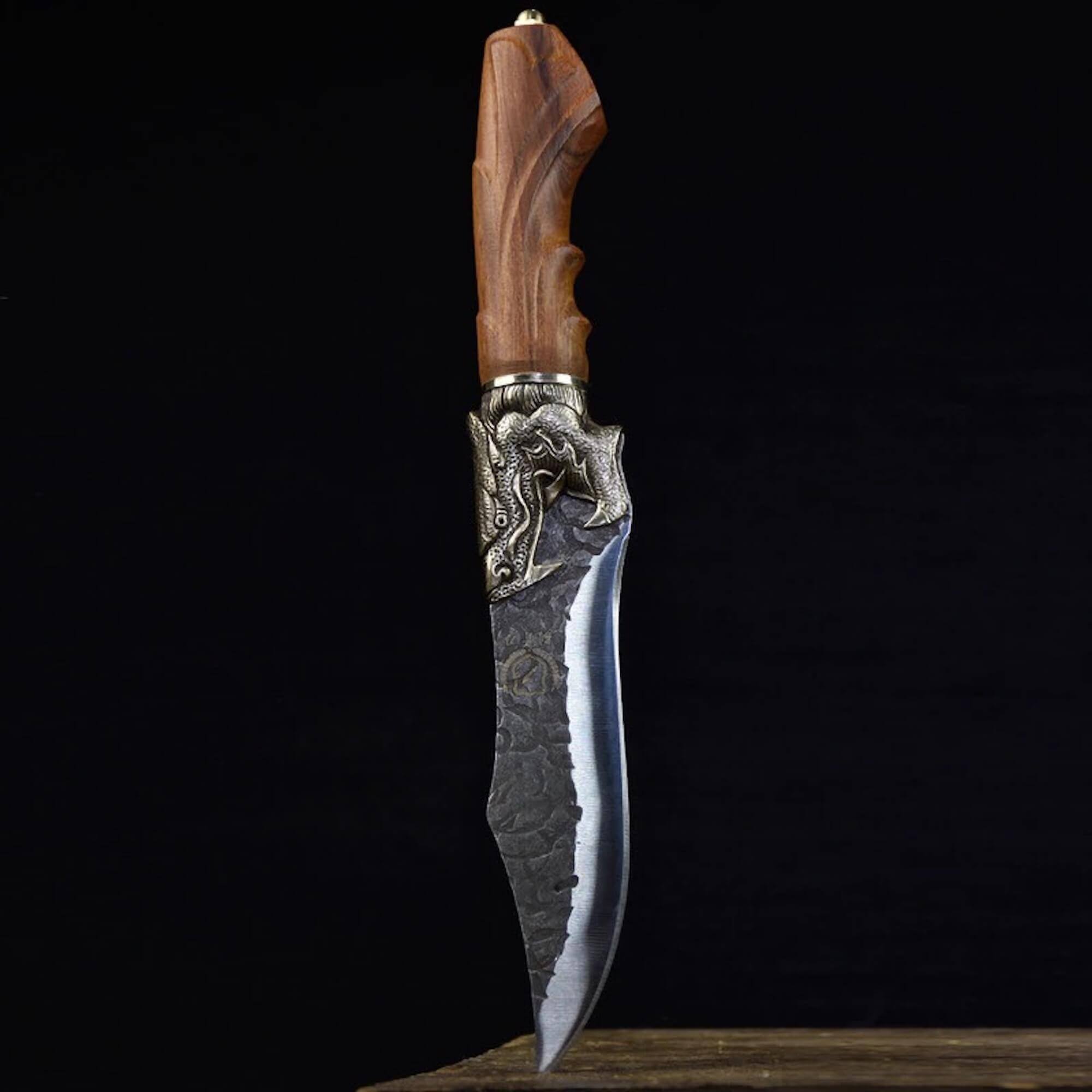
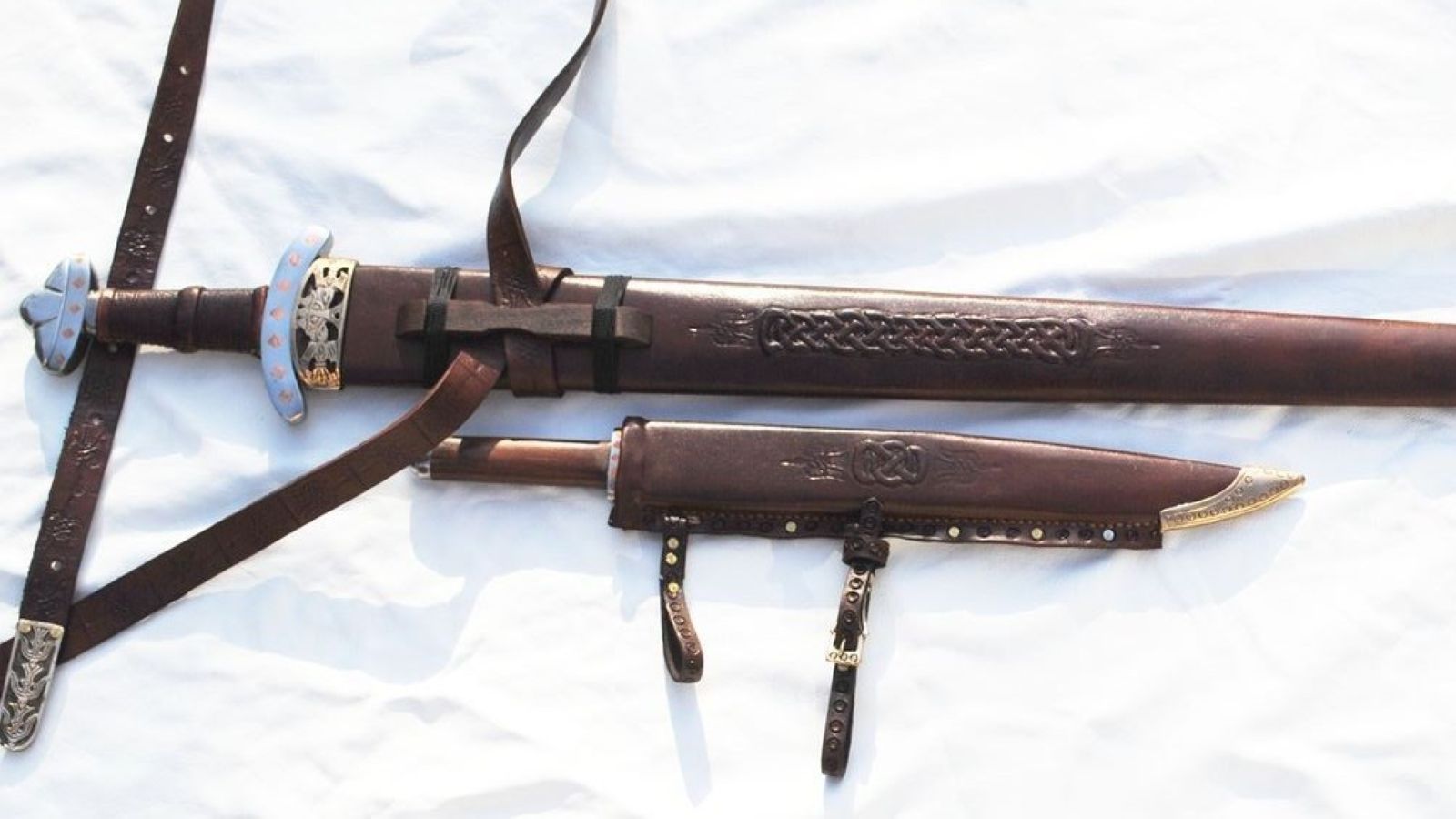
The seax (or sax) was a single-edged, thick-backed knife or short sword worn horizontally across the front of the belt. Ranging from small utility blades to massive long-seaxes over two feet in length, it was the definitive sidearm of Northern Europe. In fact, the weapon was so integral to Anglo-Saxon and Germanic identity that it gave the Saxons their very name.
Unlike double-edged swords, the seax was built primarily as a heavy-duty tool. Its thick spine gave it structural durability, while its characteristic "broken-back" profile, where the blade angles sharply down toward the point; created a strong, lethal tip ideal for thrusting.
The seax represented everyday utility:
-
Universal Access: Under Old Norse and Anglo-Saxon law, carrying a seax was the right and duty of every free citizen (bóndi). It was worn by farmers, craftsmen, sailors, and warriors alike.
-
Dual-Purpose Functionality: A farmer used his seax to butcher livestock, clear brush, slice timber, and carve wood around the homestead.
-
Close-Quarters Defense: When a shieldwall broke or a combatant was wrestled to the ground, a long sword became unwieldy. The compact, vicious nature of the seax made it the ultimate weapon for cramped, brutal close-quarters combat.
The Broadsword: Symbols of Wealth and the Martial Elite
If the seax was the working man’s blade, the double-edged broadsword was the ultimate symbol of power, wealth, and aristocratic prestige. In early medieval Scandinavia, iron was labor-intensive to produce, and crafting a double-edged sword required extraordinary metallurgical skill. Owning a sword was equivalent to owning a luxury vehicle today; reserved almost exclusively for chieftains, jarls, royal housecarls, and wealthy raiders.
Norse broadswords were designed specifically for open warfare, featuring broad, double-edged blades with a central groove (fuller) to reduce weight while maintaining flexibility.
The broadsword embodied battlefield prestige:
-
Complex Craftsmanship: Many swords featured pattern-welded blades, where smiths twisted layers of high-carbon and low-carbon iron together, creating striking wave-like patterns along the steel.
-
Heirloom Status: Swords were so valuable that they were named, personalized, and passed down through generations. Sagas frequently tell of inherited blades like Leg-Biter or Skofnung, believed to carry the luck and spirit of their previous owners.
-
Reach and Cutting Power: With an average length of 30 to 36 inches, a double-edged broadsword offered superior reach from the back of a horse, aboard a ship, or over the top of an enemy shieldwall.
Seax vs. Broadsword Comparison
| Attribute | The Seax | The Broadsword |
| Blade Geometry | Single-edged, thick spine, broken-back tip | Double-edged, central fuller, tapered point |
| Primary Role | Everyday utility, butchery, backup defense | Primary military sidearm, status symbol |
| Cost & Availability | Inexpensive; worn by all free men and women | Extremely costly; restricted to nobles and elites |
| Wear Style | Carried horizontally at the front waistbelt | Carried in a scabbard suspended at the hip |
Complementary Steel of the North
Rather than competing side-by-side, the seax and the broadsword complemented one another within Norse culture. The broadsword won battles and elevated kings, but the seax built the longhouses, carved the ships, and protected the hearth. Together, these two blades represent the dual nature of the Norse world: a society anchored in hard, practical daily labor, yet always prepared for the glory and terror of the battlefield.