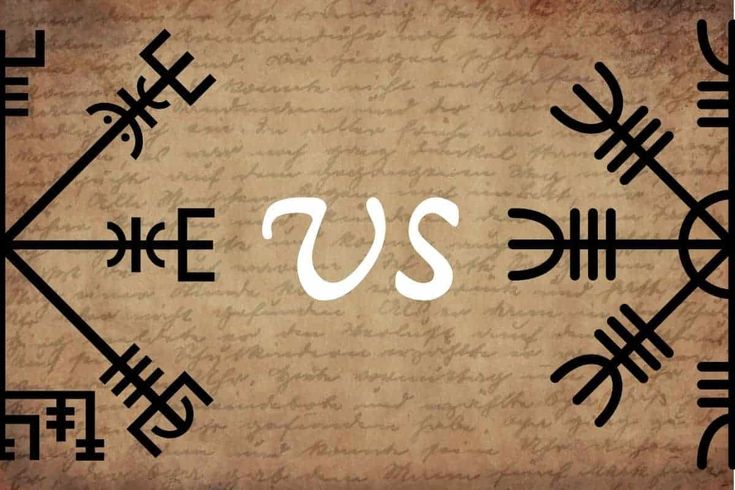
Aegishjalmur vs. Vegvisir: The Truth Behind the Viking Compass
In the modern world of Norse-inspired tattoos, jewelry, and home decor, two symbols reign supreme: the Aegishjalmur and the Vegvisir. Often grouped together under the umbrella of Viking symbols, they are frequently seen on the chests of warriors in films or etched into the leather of "authentic" Norse gear. However, the historical reality behind these sigils is far more complex and surprising. While they carry a powerful Nordic spirit, their origins and meanings are often misunderstood by the modern enthusiast.
The Origins of the Staves
The most significant "truth" to uncover is that neither the Aegishjalmur nor the Vegvisir can be found on any artifact from the Viking Age. You won't find them carved into runestones from the 9th century or etched into the prows of sunken longships. Instead, these symbols appear in Icelandic grimoires, or "Galdrabækur," which date to several centuries after the official end of the Viking era.
These manuscripts, such as the Huld Manuscript, represent a fascinating blend of ancient Norse tradition and later medieval folk magic. While the symbols are deeply rooted in the Icelandic cultural memory and the Old Norse language, they are technically products of the post-Viking medieval period.
Aegishjalmur: The Helm of Awe
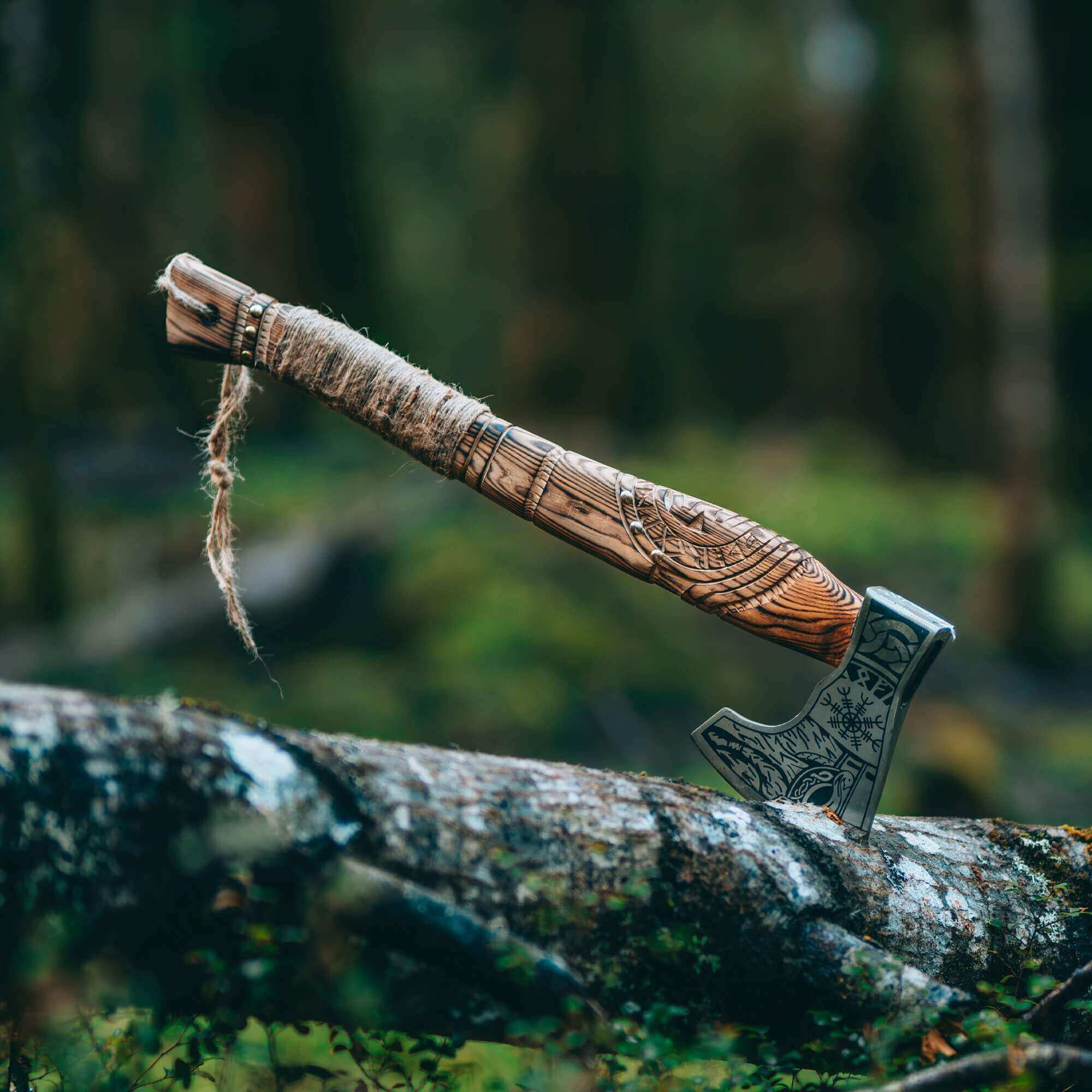
The Aegishjalmur, or Helm of Awe, is a symbol of protection and psychological dominance. Visually, it consists of eight spiked arms radiating from a central point, often resembling a snowflake made of tridents. The name itself appears in the Poetic Edda, where the dragon Fafnir wears the "helm of awe" to strike fear into his enemies and protect his hoard.
In the later magical tradition, the symbol was intended to be pressed between the eyebrows or worn on the forehead. Its purpose was twofold: to protect the wearer from the abuse of power and to strike terror into the heart of an adversary. It is a defensive sigil designed to create a mental fortress, ensuring that the warrior remains unshakable while the opponent falters in their presence.
Vegvisir: The Wayfinder
The Vegvisir is perhaps the most popular Norse symbol in the world today, commonly referred to as the "Viking Compass." It consists of eight distinct branches, each ending in a unique geometric design. The legend accompanying the symbol in the Huld Manuscript states that if this sign is carried, one will never lose their way in storms or bad weather, even when the way is not known.
Despite its nickname, the Vegvisir is not a navigational tool like a magnetic compass. It is a spiritual and magical stave intended to provide guidance through the "storms" of life. It represents the idea of maintaining one's path when the world becomes chaotic. Calling it a Viking Compass is technically a modern misnomer, but its power as a symbol of resilience and direction remains deeply resonant for those who follow the Northern path today.
Key Differences in Purpose
While they look similar to the untrained eye, the Aegishjalmur and Vegvisir serve very different spiritual functions. The Aegishjalmur is outward-facing; it is a shield and a weapon used to interact with the world and those who might do you harm. It is about power, projection, and protection.
The Vegvisir, by contrast, is inward-facing. It is about the self and the journey. It does not seek to intimidate others but rather to stabilize the person carrying it. If the Aegishjalmur is your shield in a fight, the Vegvisir is the North Star that leads you back home after the battle is over.
Choosing the Right Symbol for Your Life
When incorporating these symbols into your modern "Viking" lifestyle, it is helpful to choose the one that aligns with your current needs. If you are facing a period of conflict or need the courage to stand your ground against unfair treatment, the Aegishjalmur is the traditional choice for strength. It reminds the modern warrior to remain formidable in the face of pressure.
If you are going through a transition, starting a new chapter, or feeling lost in the complexities of modern life, the Vegvisir is a powerful companion. By understanding that these are magical staves of Icelandic heritage rather than ancient Viking battle standards, you can appreciate them for what they truly are: beautiful, enduring echoes of the Norse spirit that continue to provide strength and guidance in the modern age.