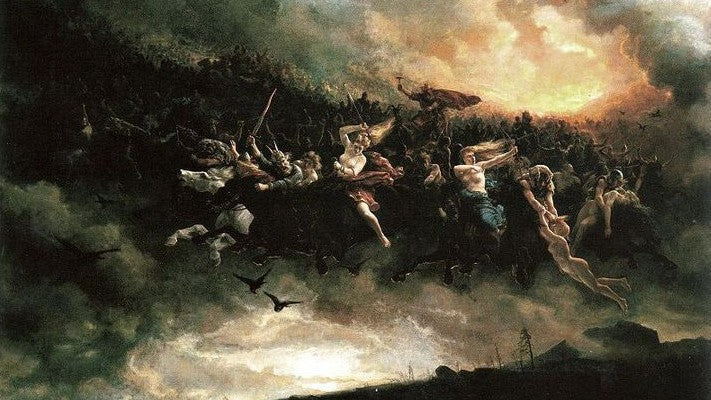
The Wild Hunt: Oskoreia and the Dark Spirits of Northern Winters
As the twilight of October deepened and long winter nights enveloped the Scandinavian landscape, rural homesteads prepared for a threat far more terrifying than freezing blizzards or wild beasts. In Old Norse tradition, the coldest months belonged to the supernatural; a time when the veil between the living and the dead vanished entirely. At the dark heart of this winter folklore was the terrifying legend of Oskoreia, known across Europe as the Wild Hunt: a spectral, howling procession of restless spirits, phantom hounds, and dark deities sweeping across the night sky.
The Rider at the Head of the Storm
While regional variations of the myth existed across Germany, Scandinavia, and the British Isles, the leader of the Wild Hunt was almost universally recognized as Odin (often in his aspect as Óðinn, the Allfather, or Wotan). In this dark context, Odin was not depicted as a wise ruler in a golden hall, but as the grim god of wind, ecstasy, and the dead.
Riding his eight-legged steed Sleipnir, draped in a dark cloak, and accompanied by his fierce ravens and wolves, Odin led a terrifying army known as the Ásgårdsreia (the Ride of Asgard). The procession consisted of the souls of the unrighteous dead, slain warriors, witches, and chaotic land spirits. They rode mounted on black horses with fiery eyes, filling the freezing night air with the clatter of phantom iron hooves, cracking whips, and agonizing shrieks.
Hearing the howling winter winds whistle through the gables of a longhouse was not viewed merely as bad weather; it was the audible passing of Odin’s spectral horde outside the door.
The Omens of the Hunt: Terror for the Solitary Traveler
To cross paths with Oskoreia was considered a immediate sentence of death or madness. The legend served as a stark warning to avoid traveling alone after dark during the winter months, particularly around the time of Winter Nights (Vetrnætr) and Yule.
Folklore recorded several fates for those caught outdoors when the spectral procession passed:
-
Abduction: Unwary travelers were swept up into the air by the rushing wind, forced to join the nightmare procession and ride alongside spirits until they collapsed from exhaustion miles from home.
-
Soul Theft: Simply looking directly at the procession could cause a person’s soul to be ripped from their physical body, leaving them dead or paralyzed.
-
Property Destruction: The phantom riders were said to enter unbolted barns, consume the winter ale, and slaughter or terrify livestock if proper protective measures were not taken.
To survive an encounter if caught outdoors, folk wisdom dictated that a person must throw themselves face down onto the earth, press their hands over their eyes, and make the sign of Thor's hammer or pray for divine protection, remaining completely silent until the thunderous noise faded into the distance.
Protective Wards and Longhouse Rituals
Because the Wild Hunt was believed to target homes during the dark months, Scandinavian households developed elaborate protective rituals to shield their families and livestock.
Before dusk fell during the height of winter, families took explicit precautions:
-
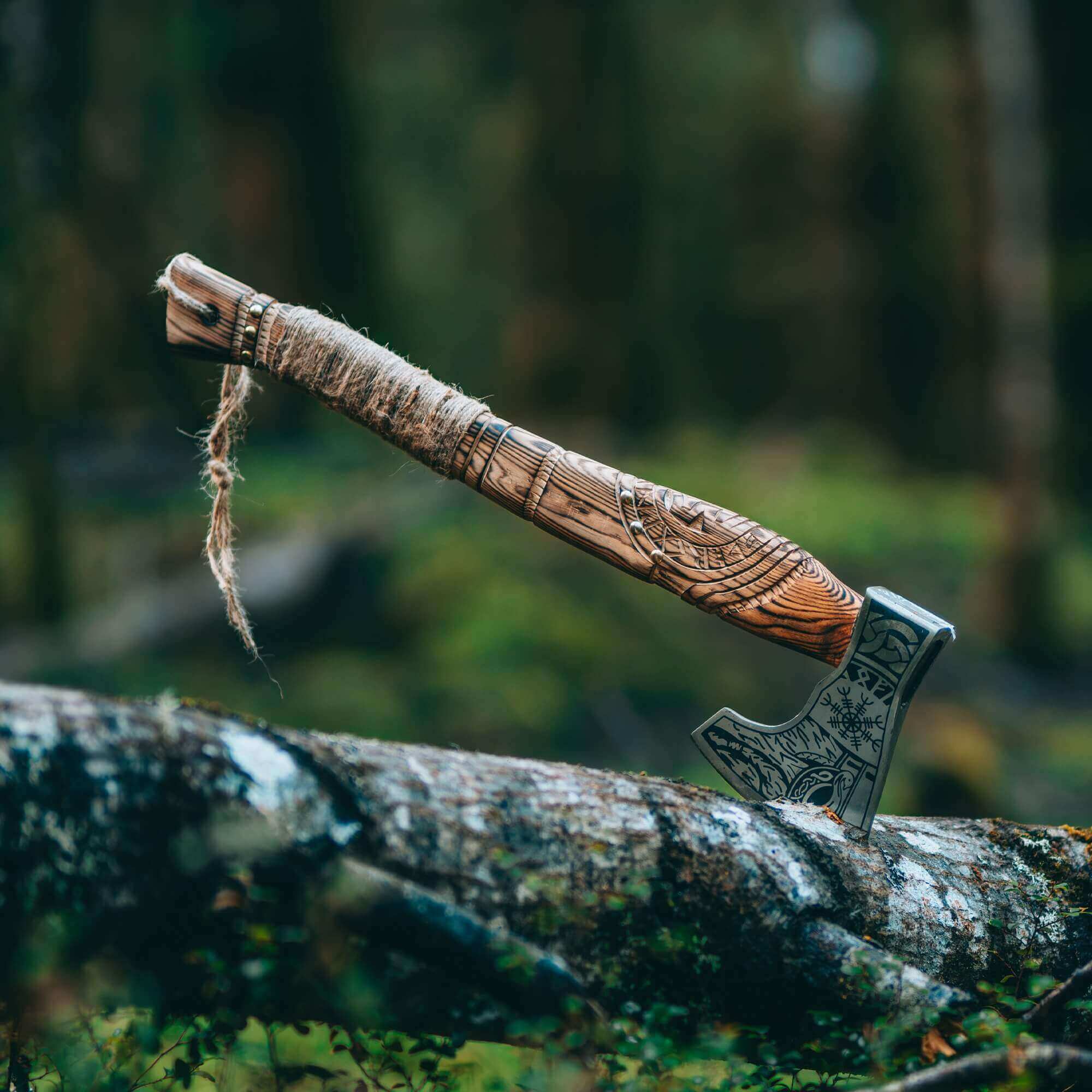
Steel and Iron Shields: Iron was believed to repel evil spirits. Scythes, knives, and iron axes were driven into doorframes, placed above stable doors, and laid across grain bins to keep phantom riders at bay.
-
Runic and Cross Wards: Protective symbols, including tar-painted solar crosses and runic staves, were painted onto the heavy timber doors of longhouses and outbuildings.
-
Offerings of Ale and Food: Rather than risking the wrath of the riders, households left offerings of freshly brewed Yule ale and bread outside the farmstead gate or on burial mounds to appease the procession so it would pass without causing harm.
The Psychological Core of Northern Winter Lore
The legend of Oskoreia reflects the deep psychological reality of life in the ancient North. During the long, sunless winter months, when communities were isolated by heavy snow and surrounded by vast, unexplored wilderness, the mind naturally transformed the roaring arctic winds into supernatural forces.
By giving form to the terror of the dark through the story of the Wild Hunt, the Norse created a framework for understanding the dangers of winter. It reinforced the importance of remaining indoors, maintaining the safety of the longhouse hearth, and respecting the raw, untamed forces of nature and the spirit world until the return of the sun.