The Viking Winter Survival Guide: Heat, Food, and Mental Fortitude in the Dark
For the people of the ancient North, winter was not merely a change in weather; it was an existential adversary. From November through March, Northern Europe was locked under heavy snow, frozen fjords, and oppressive darkness where daylight dwindled to a fleeting few hours. With raiding ships pulled onto land and fields frozen solid, survival depended entirely on the preparation, structural engineering, and mental grit cultivated during the summer months. To endure the harsh Scandinavian winter, Norse communities relied on a three-part blueprint: controlling heat, preserving food, and maintaining communal strength in the dark.
Longhouse Engineering: Mastering Heat and Insulation
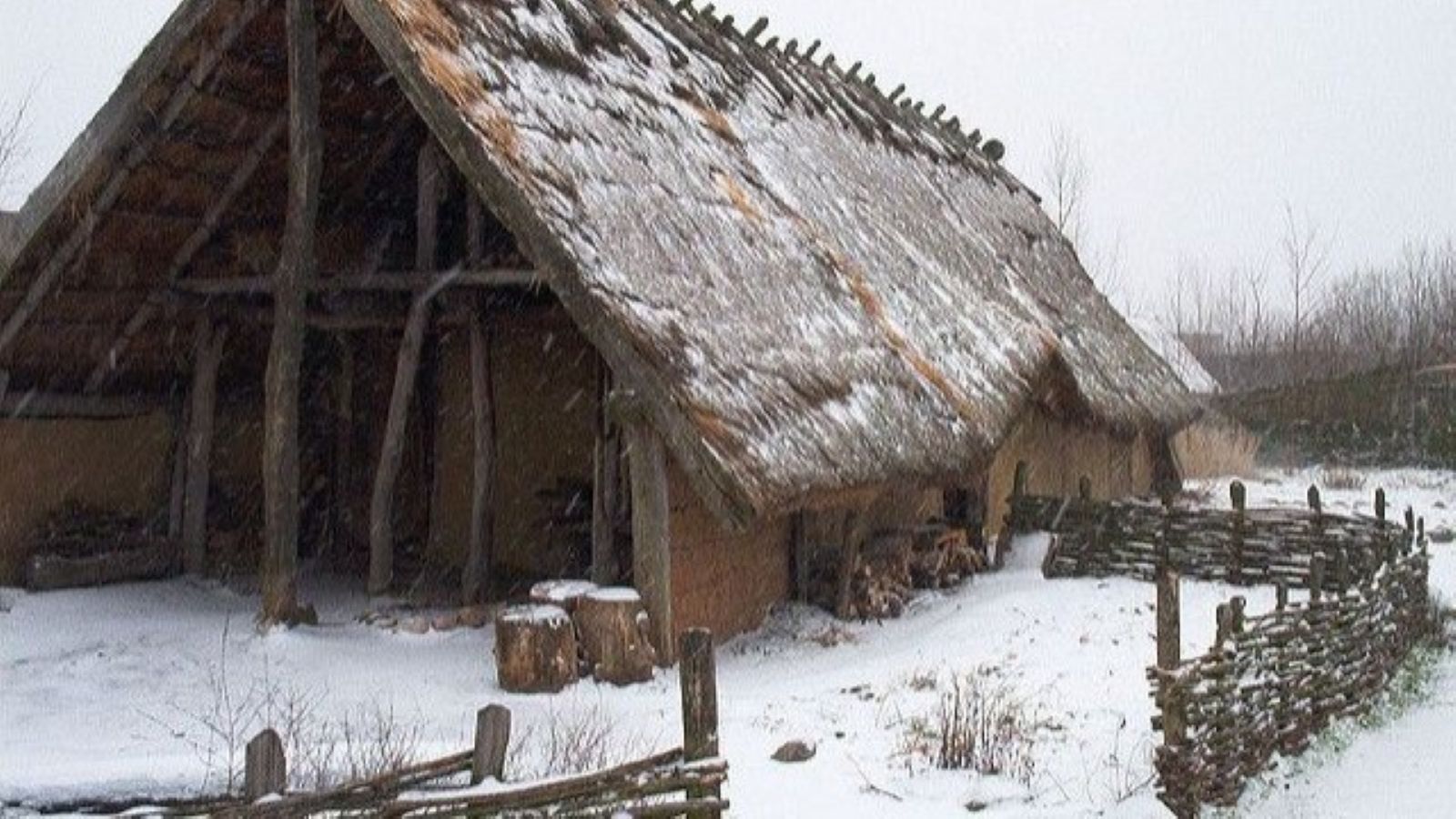
The primary defense against sub-zero temperatures was the longhouse (skáli). Ranging from fifty to over one hundred feet in length, these buildings were engineered specifically to trap heat and withstand heavy polar winds.
-
Sod and Turf Insulation: Walls were built using double-layered timber lined with thick sod or turf, providing exceptional thermal insulation. In colder regions like Iceland, turf walls were built several feet thick to keep internal temperatures stable regardless of blizzards outside.
-
Low Rooflines and Draft Control: Longhouses featured low, curved roofs designed to shed heavy snowfall while minimizing the internal volume that needed heating. Entrance doors were small and recessed, often flanked by inner vestibules to prevent cold drafts from sweeping into the living quarters when people entered.
-
The Central Hearth: Running down the middle of the earthen floor was the long fire pit (langeldr). This central hearth burned continuously, providing the home's only source of heat, light, and cooking fire. Smoke drifted upward to escape through small louvers in the roof, creating a warm, perpetually smoky atmosphere that also served to keep insects and timber rot at bay.
Preserving the Harvest: The Science of Winter Feasts
Survival through a six-month freeze required total mastery of food preservation. Because fresh crops were unavailable and livestock feed was limited, food had to be processed and stored before the first frost.
To stretch resources through the dark months, the Norse relied on specialized preservation techniques:
-
Fermentation and Curing: Meats were heavily smoked over hardwood fires or cured in large barrels of sour whey (sýra), a natural lactic acid preserver that kept pork and mutton edible for months without expensive salt.
-
Stockfish Production: Cod caught during late autumn were hung on open-air wooden racks along cold coastal cliffs. The combination of freezing temperatures and dry arctic winds naturally dehydrated the fish without spoiling it, creating a dense, protein-rich staple that remained edible for years.
-
Dairy and Grains: Milk was processed into hard cheeses, butter, and skyr (a thick, cultured dairy product), while barley and oats were dried and stored in elevated, rat-proof granaries to form the base of daily stews and flatbreads.
The Mental Battle: Overcoming the Darkness with Community
The physical challenge of cold was matched by the psychological toll of endless darkness. Long periods of isolation indoors tested the mental fortitude of every clan member. To combat cabin fever, depression, and social friction, the Norse transformed the longhouse into an active social hub.
When outdoor work was impossible, daily activity shifted to indoor craft and maintenance. Men carved wooden tools, repaired leather gear, and forged iron fittings by the hearth, while women spun wool, wove textiles, and tended the fire. Staying productive prevented lethargy and kept the household operating smoothly.
Central to winter mental health was the tradition of storytelling (sagnaskemmtun). As the fire crackled, elders and skalds recited complex sagas, heroic poems, and mythological tales. Listening to legends of Thor battling frost giants or ancestors enduring great trials gave people a sense of purpose, linking their immediate discomfort to a grander tradition of heroic endurance.
Winter was also punctuated by Yule (Jól), a major multi-day festival held around the winter solstice. Communities gathered to sacrifice livestock to the gods, toast to a prosperous new year, and share abundant preserved food and mead. Celebrating the solstice reminded everyone that the sun wheel had turned, the light was returning, and spring was on the horizon.
The Legacy of the Northern Winter
The Norse approach to winter proves that survival is as much about mindset as physical preparation. By combining smart architecture and resourceful food preservation with a strong communal spirit, the Vikings did not merely endure the dark months, they used them to bond, reset, and prepare for the voyages of the coming spring.