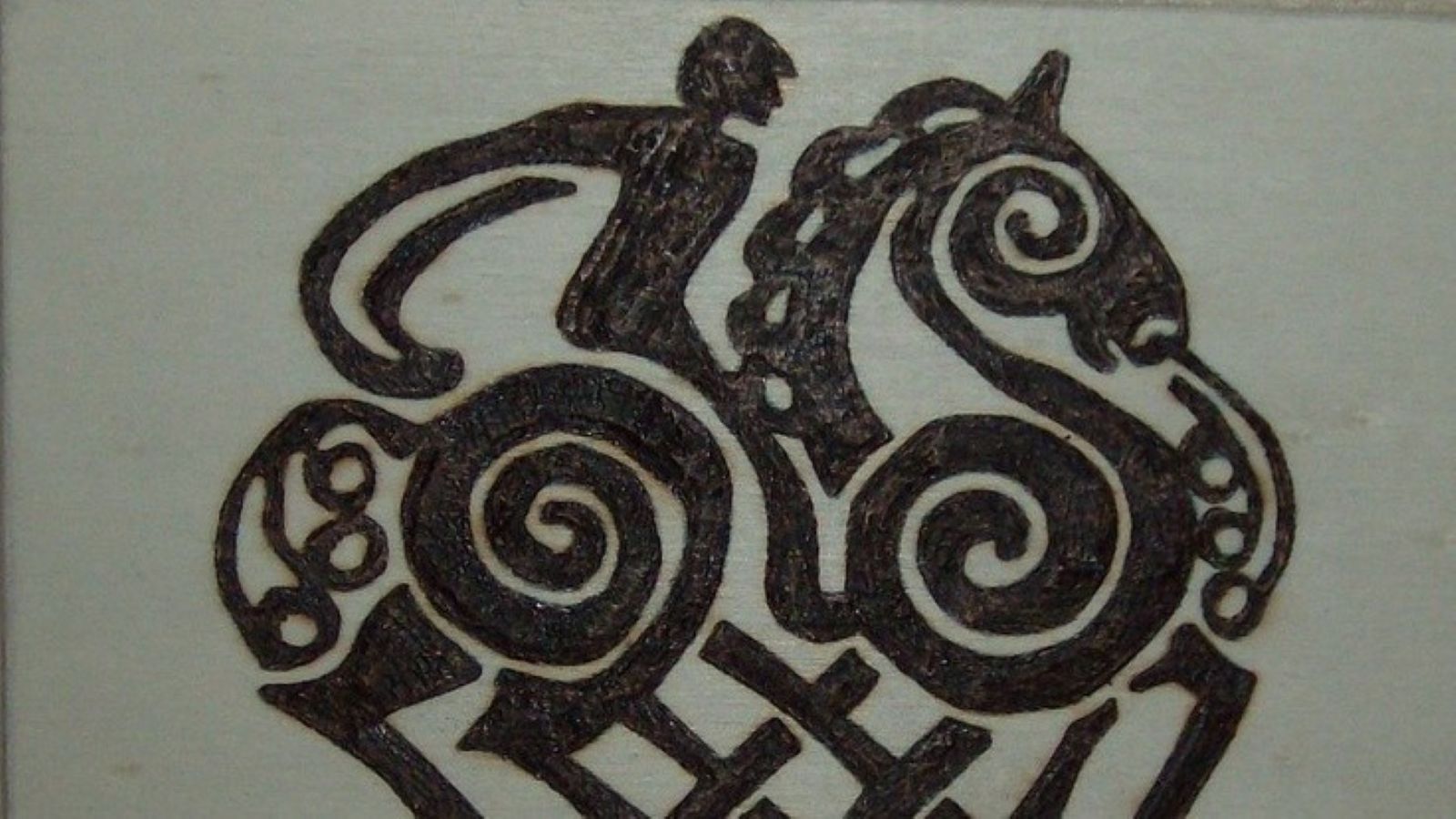
The Viking Horse: Sacred Companion of the Battlefield and the Gods
When visualizing early medieval Scandinavia, our minds naturally drift to longships cutting through ocean foam, iron axes splitting shields, and timber halls glowing with firelight. Yet, across the rugged fjords, mountain passes, and open plains of the North, another figure was essential to both daily survival and cosmic mythology: the horse. In Old Norse culture, the horse was far more than livestock or a simple beast of burden. It was a vital partner in transport, an elite status symbol, a fierce combatant, and a sacred mediator between the physical world and the realms of the gods.
Sleipnir and the Divine Equines of Asgard
The spiritual reverence for the horse is woven into the very fabric of Norse mythology. The most famous equine in the sagas is Sleipnir, Odin’s legendary eight-legged stallion. Born of the trickster god Loki, Sleipnir was described as the fastest and greatest of all horses, capable of galloping over land, across the stormy open sea, and through the air into the realm of the dead. His eight legs represented absolute swiftness and the ability to traverse all Nine Realms of Yggdrasil.
Beyond Sleipnir, horses held pivotal roles in the cosmic order:
-
Skinfaxi and Hrímfaxi: The horses that pulled the chariots of Day (Dagr) and Night (Nótt) across the sky. Skinfaxi’s glowing mane illuminated the earth, while Hrímfaxi’s dripping bit created the morning dew.
-
Freyfaxi: Horses dedicated to Freyr, the god of fertility, rain, and sunshine. These stallions were held so sacred that touching them without religious authority could result in immediate execution or outlawry.
The Real Scandinavian Horse: Small, Tough, and Indispensable
The historical horse of the Viking Age was not a massive, heavily armored warhorse seen in late medieval jousting tournaments. Instead, it closely resembled the modern Icelandic Horse—a direct descendant of the small, sturdy horses brought across the sea by early Scandinavian settlers in the ninth century.
Standing between 13 and 14 hands high, these horses possessed incredible endurance, thick double coats to resist freezing blizzards, and a sure-footed nature perfectly suited for rocky mountain paths and boggy valleys. Crucially, they possessed two unique natural gaits beyond the walk, trot, and gallop: the tölt (a smooth, four-beat ambling gait) and the skeið (flying pace). These gaits allowed riders to cover immense distances over rough terrain without exhausting the horse or punishing the rider’s body.
Battlefield Mobility and Stallion Fights
While Viking Age warriors fought primarily on foot within the shieldwall, horses were critical to operational military success. Ships brought warriors to coastal rivers, but horses allowed warbands to strike fast and deep into inland territories before local defenses could mobilize. Owning a horse on campaign meant superior mobility, swift reconnaissance, and an efficient way to transport heavy iron armor, spears, and provisions.
Beyond campaign transport, horses were central to a popular and brutal Scandinavian sport: the Hestavíg, or stallion fight.
To test breeding lines and entertain the community during seasonal assemblies (Things), two aggressive stallions were staged facing each other in the presence of a mare. Encouraged by their owners using wooden goads, the stallions would rear up, bite, and kick with immense power. These events were high-stakes spectacles; a winning stallion brought massive prestige and high breeding fees to its owner, while a losing fight could ignite long-standing family feuds.
The Ultimate Sacrifice and Burial Companion
Because horses were expensive to raise and deeply bonded to their owners, they were viewed as ultimate symbols of wealth and social status. This value carried over into death and burial rituals.
Archaeological excavations across Scandinavia, the UK, and Iceland have uncovered high-status warrior graves containing the skeletal remains of horses buried alongside their masters. Famous ship burials, such as the Oseberg and Gokstad ships in Norway, contained multiple horse sacrifices.
To the Norse mindset, a warrior could not enter the halls of Valhalla or the afterlife on foot like a common laborer. Sacrificing a loyal stallion during the funeral ceremony ensured that the deceased noble or warrior entered the next realm with the same dignity, power, and swift mobility they commanded in life.
An Enduring Bond of the North
The story of the Viking horse reminds us that the expansion of the Norse world relied on a deep partnership with the natural world. From the cosmic heights of Sleipnir carrying Odin across the skies to the small, tough stallions hauling timber through snow-bound valleys, the horse was a sacred companion, forging a legacy of loyalty, strength, and endurance that echoes through Northern history.