Innangard and Utangard: Order, Chaos, and the Viking Worldview
In the Norse worldview, everything — from family life to cosmic forces — could be understood through two powerful concepts:
Innangard and Utangard.
These weren’t just physical spaces. They represented the difference between order and wildness, law and lawlessness, the familiar and the unknown.
To the Vikings, this division shaped not only their surroundings but the way they understood honor, society, and even the gods themselves.
Let’s step into this ancient framework and explore how the Norse people saw their place in the world.
Innangard: The Realm of Order
The word Innangard translates roughly to “inside the fence.”
It refers to spaces that are cultivated, structured, and governed by rules, both social and cosmic.
1. The Home and Farm
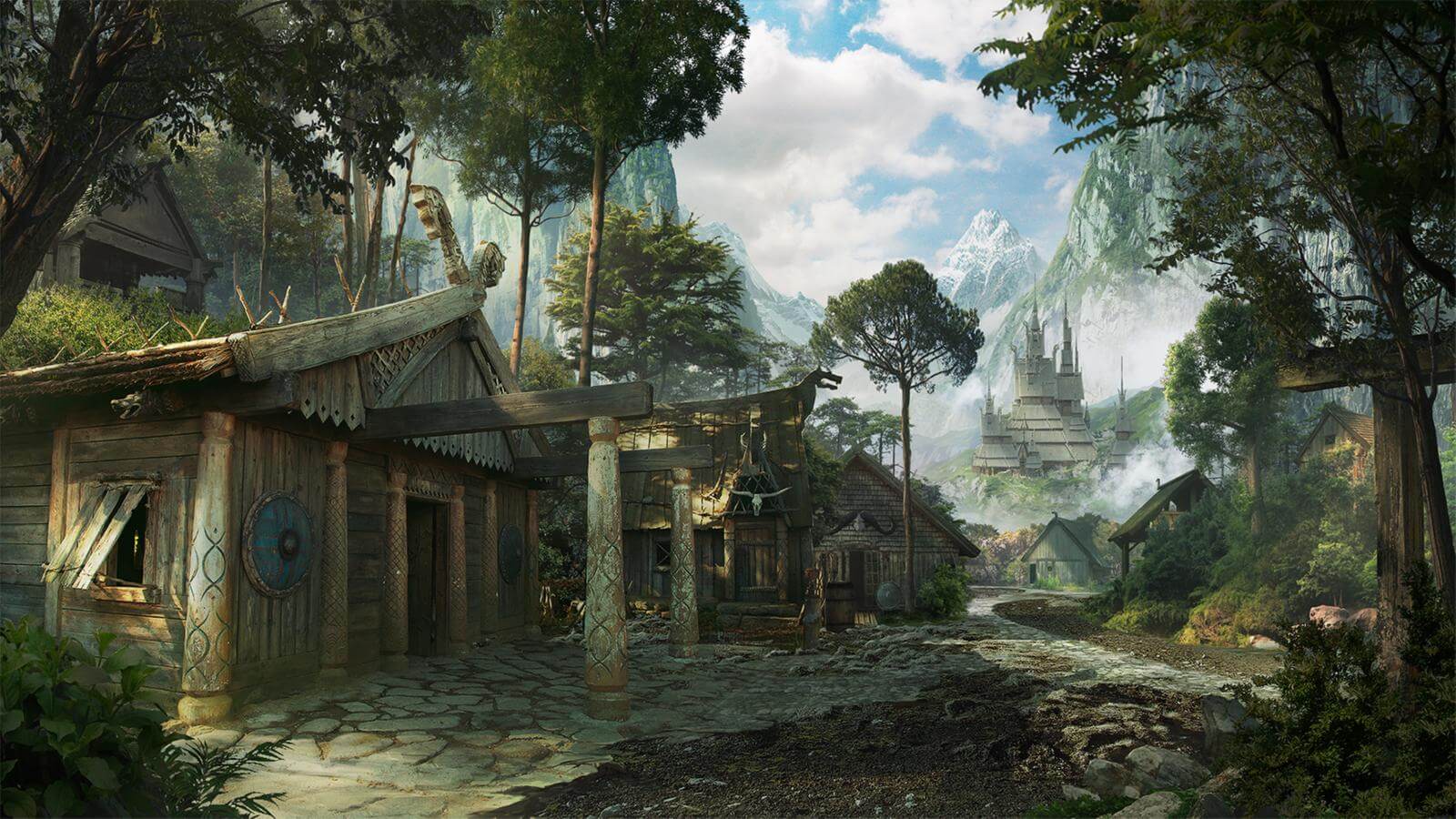
A Viking longhouse, surrounded by its farm and fences, was the heart of Innangard.
Here lived:
- family;
- kin;
- allies;
- those bound by trust and obligation.
Within this sphere, everyone knew their responsibilities. Customs were upheld, disputes were settled through law, and honor was protected.
2. Law, Stability, and Social Bonds
The Viking legal system, including the Thing (assembly), belonged to Innangard.
Here, justice was handled not with impulse but with structure:
- compensation for wrongs;
- public decisions;
- oaths and sworn agreements.
Breaking these rules wasn’t just a crime; it pushed a person figuratively, and sometimes literally, into Utangard.
3. The Divine Parallel: Asgard
Even the gods had their own Innangard.
Asgard, surrounded by strong walls, reflects order and protection.
Within these boundaries, the gods met in councils, forged alliances, and prepared for the threats outside.
Innangard, then, was a place where life could flourish without fear.
Utangard: The Realm Beyond the Fence
If Innangard represented the known world, Utangard was everything beyond it, both physically and spiritually.
Its literal meaning, “outside the fence,” hints at an existence that was unpredictable, untamed, and often dangerous.
1. Wilderness and the Unknown
To Viking communities, the world outside farms and settlements was wild territory:
- deep forests
- icy mountains
- stormy seas
- lands of the wandering dead
This wilderness could be beautiful, but it wasn’t bound by human rules or protections.
2. Outsiders and the Lawless
A person pushed out of society — an outlaw — became “útlægur” (outside the law).
This meant they were cast into Utangard both physically and symbolically:
- no legal protection
- no right to compensation
- free for anyone to harm
Outlawry was the harshest punishment because it thrust someone into the chaotic realm beyond order.
3. Giants and Primordial Forces
Just as Asgard symbolized Innangard, Jotunheim embodied Utangard.
The giants (Jötnar) weren’t merely monsters, they were forces of raw nature:
chaotic, ancient, and resistant to the structured world of gods and humans.
While they interacted with the gods often, they stood firmly outside the boundaries of order.
Though the Vikings feared Utangard, they also understood that without chaos, order loses meaning.
The relationship between Innangard and Utangard wasn’t simple opposition — it was a balance:
- Heroes proved themselves by venturing into Utangard
- Gods gained wisdom by engaging with giants
- Travelers and explorers expanded Innangard by surviving the unknown
Crossing the fence was risky, but sometimes necessary.
Innangard and Utangard in Everyday Viking Life
These concepts influenced much more than cosmic myths.
Honor and Reputation
A person inside Innangard was bound by oaths and honor.
Breaking those bonds — lying, betraying kin, refusing rightful compensation — threatened to place them outside the social fence.
Travel and Exploration
The Vikings were masters of venturing into Utangard:
open seas, foreign lands, and unknown horizons.
Their success in exploration and trade can be understood as a controlled step beyond the boundaries, expanding their world one voyage at a time.
Rituals and Protection
Magic, rituals, and charms were used to guard the boundary between the safe and the wild.
Crossing into Utangard required offerings, caution, and often bravery.
Though centuries have passed, the idea of “inner order” and “outer chaos” remains surprisingly relatable.
Every culture still has:
- protected spaces (home, community, law)
- wild or uncertain spaces (wilderness, risk, the unknown)
The Vikings simply expressed these ideas in bold, poetic terms that reflect the intensity of their world.
Innangard and Utangard offer a window into how the Norse people understood existence itself.
They saw life as a constant interplay between stability and the unknown — between the safety of home and the challenges that lay beyond its boundaries.
These ancient ideas didn’t just shape their myths and legends; they shaped their society, their journeys, and their understanding of what it meant to live honorably in a vast and unpredictable world.