The Art of the Skald: Old Norse Poetry and How to Read It
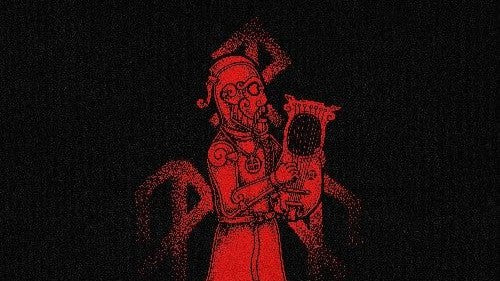
While the Vikings are often remembered for the physical power of their steel, they valued the power of the word just as highly. In the halls of the Norse elite, the Skald was a figure of immense prestige. These were the court poets, historians, and masters of language who held the keys to immortality. To the Norse, a warrior might die, but their fame would live forever if a Skald captured their deeds in verse. This was a culture where the "Mead of Poetry" was a gift from Odin himself, and a well-crafted stanza was considered as sharp and effective as any blade.
The Divine Origin of Verse
The mythology of poetry is as dramatic as the sagas themselves. According to legend, poetry was born from the blood of Kvasir, a being created from the saliva of the gods who was the wisest man in the world. After Kvasir was murdered by dwarves, his blood was mixed with honey to create a magical mead. Anyone who drank it would become a Skald or a scholar. Odin eventually stole this mead back for the gods and for those humans he deemed worthy. This myth highlights how the Vikings viewed creativity: it was a divine, intoxicating, and hard-won force that required both natural talent and spiritual favor.
The Complexity of the Kenning
To read Old Norse poetry is to solve a beautiful, linguistic puzzle. The Skalds rarely called a thing by its plain name; instead, they used "kennings," which are metaphorical compound words. A ship was not a ship, but a "Steed of the Sea." Gold was "Sif’s Hair" or the "Fire of the River." A battle was the "Clash of Shields" or the "Feast of Ravens." These metaphors required the listener to be deeply familiar with Norse mythology and the natural world. If you hear a poet speak of the "Sky of the Dwarves," you must know the myth that four dwarves hold up the skull of the giant Ymir to understand they are simply talking about the heavens.
Dróttkvætt: The Court Meter
The most prestigious form of Skaldic poetry was the dróttkvætt, or the "court meter." This was an incredibly complex structure that involved strict rules for syllable counts, alliteration, and internal rhyme. Unlike modern poetry, which often focuses on emotion, Skaldic verse was a display of technical mastery. A poet would stand before a King and deliver a poem where the first letter of certain words had to match across lines, all while adhering to a rhythmic beat. This structure made the poems easy to memorize but nearly impossible to fake, ensuring that the history of the North was preserved in a "verbal fortress" that could not be easily altered over time.
isdom in the Hávamál
Not all Norse poetry was about the glory of kings; some was about the practical wisdom of living. The Hávamál, or the "Sayings of the High One," is a collection of verses attributed to Odin himself. These poems offer advice on hospitality, friendship, and the importance of a good reputation. One of the most famous verses reminds us that "Cattle die, kinsmen die, and so must you yourself; but the fame of a good name never dies." This focus on "Word-Fame" or lífstírr shows that the Vikings lived for the stories that would be told about them after they were gone, placing the Skald at the very center of their social and spiritual world.
Reading Poetry as a Modern Seeker
Today, reading Old Norse poetry allows us to step directly into the mind of a Viking. When you learn to decode a kenning or feel the rhythm of an alliterative line, you are experiencing the same intellectual thrill that a chieftain felt in a mead hall a thousand years ago. The art of the Skald reminds us that strength is not just found in the arm, but in the mind and the tongue. By honoring these ancient verses, we keep the "Mead of Poetry" flowing, ensuring that the wisdom and the stories of the North continue to inspire new generations of thinkers and creators.