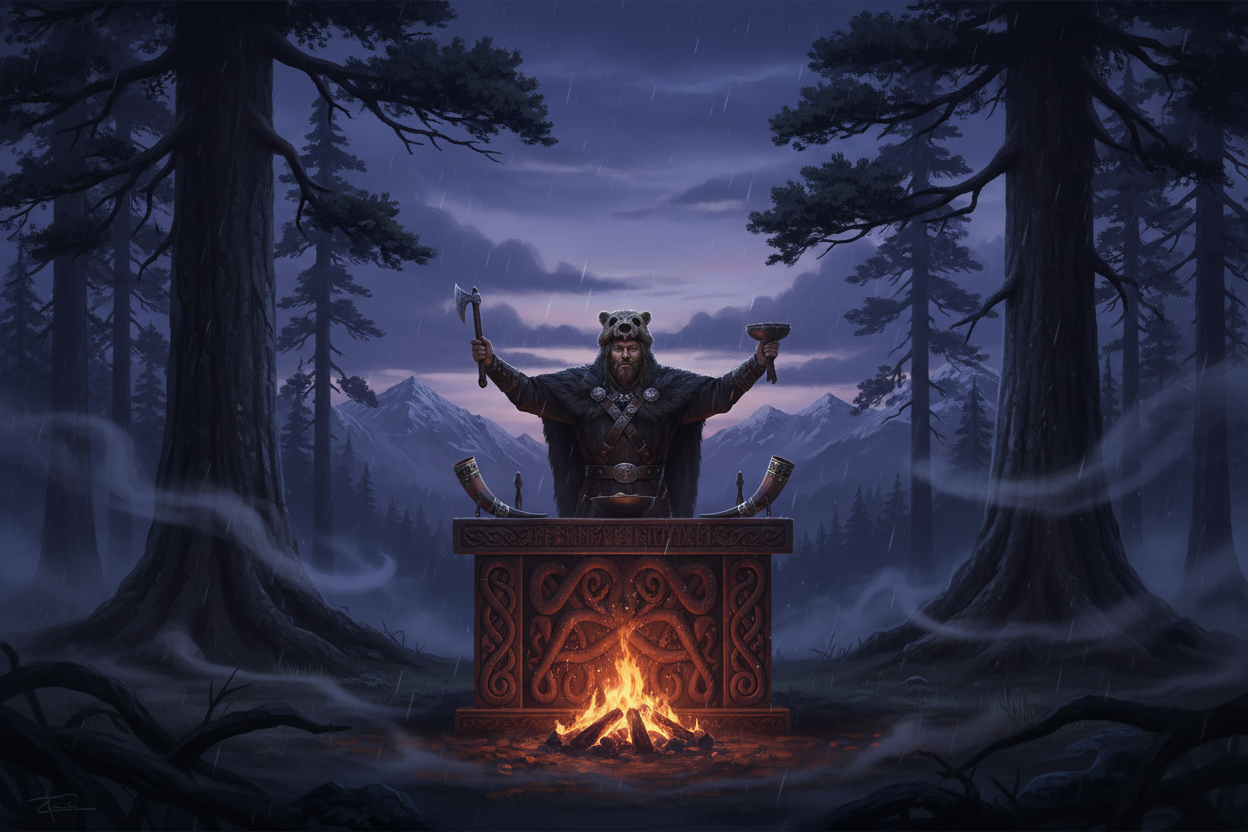
Sigrblot: The Viking Sacrifice for Victory and Prosperity
Sigrblot, which translates roughly as “victory sacrifice,” was one of the most important rituals in the Viking Age. It was a sacred ceremony performed to secure the favor of the gods before battles, during times of hardship, or at the start of the farming season. Unlike simple offerings, Sigrblot carried deep social and spiritual significance. It was believed to bring strength, protection, and success to both warriors and communities.
Sigrblot was not performed casually. It typically occurred at key moments in the year, such as before spring planting, at midwinter festivals, or before military expeditions. These occasions connected the ritual to both the cycles of nature and the demands of survival in a harsh northern climate. Leaders, chieftains, and sometimes kings oversaw the ceremony to ensure that it aligned with tradition and the needs of the people.
Ritual Practices
During Sigrblot, the community offered sacrifices to gods such as Odin, the god of war and wisdom, or Thor, the protector of the people and harvests. The offerings could include food, drink, weapons, or animals. In some accounts, livestock was sacrificed, its blood consecrating weapons, altars, or banners, symbolizing the strength and life force of the animals transferring to those taking part in the ritual.
Feasting often followed the sacrifice, creating a shared experience that reinforced loyalty, honor, and unity within the group.
Spiritual and Social Significance
Sigrblot was more than a religious ceremony. It functioned as a public declaration of courage, leadership, and commitment to community. The ritual reinforced social hierarchies, as chieftains and kings demonstrated their ability to maintain divine favor. Warriors participating in the ceremony believed that it would ensure their courage in battle and protection from harm. Farmers and commoners sought blessings for a bountiful harvest and the safety of their livestock.
Historical sources and Norse sagas frequently mention Sigrblot. The sagas often depict leaders performing the ritual before battles or campaigns, emphasizing the close link between faith, honor, and military success. While the sagas can be dramatic, they reflect a broader cultural understanding that victory required both skill and divine approval.
Legacy of the Ritual
Although the Viking Age ended centuries ago, the concept of Sigrblot continues to influence modern interest in Norse traditions. Scholars, historians, and enthusiasts study the ritual to better understand how Vikings integrated religion, community, and warfare. Festivals and reenactments in Scandinavia sometimes draw inspiration from Sigrblot, celebrating bravery, honor, and the ancient connection between people and gods.
Sigrblot embodies the Viking worldview, where success in life and battle depended on courage, skill, and the favor of the divine. The ritual reveals how deeply the Norse intertwined spirituality with daily life, governance, and warfare. Understanding Sigrblot provides a unique window into the mindset of Viking society, where the pursuit of victory was inseparable from reverence for the gods.